
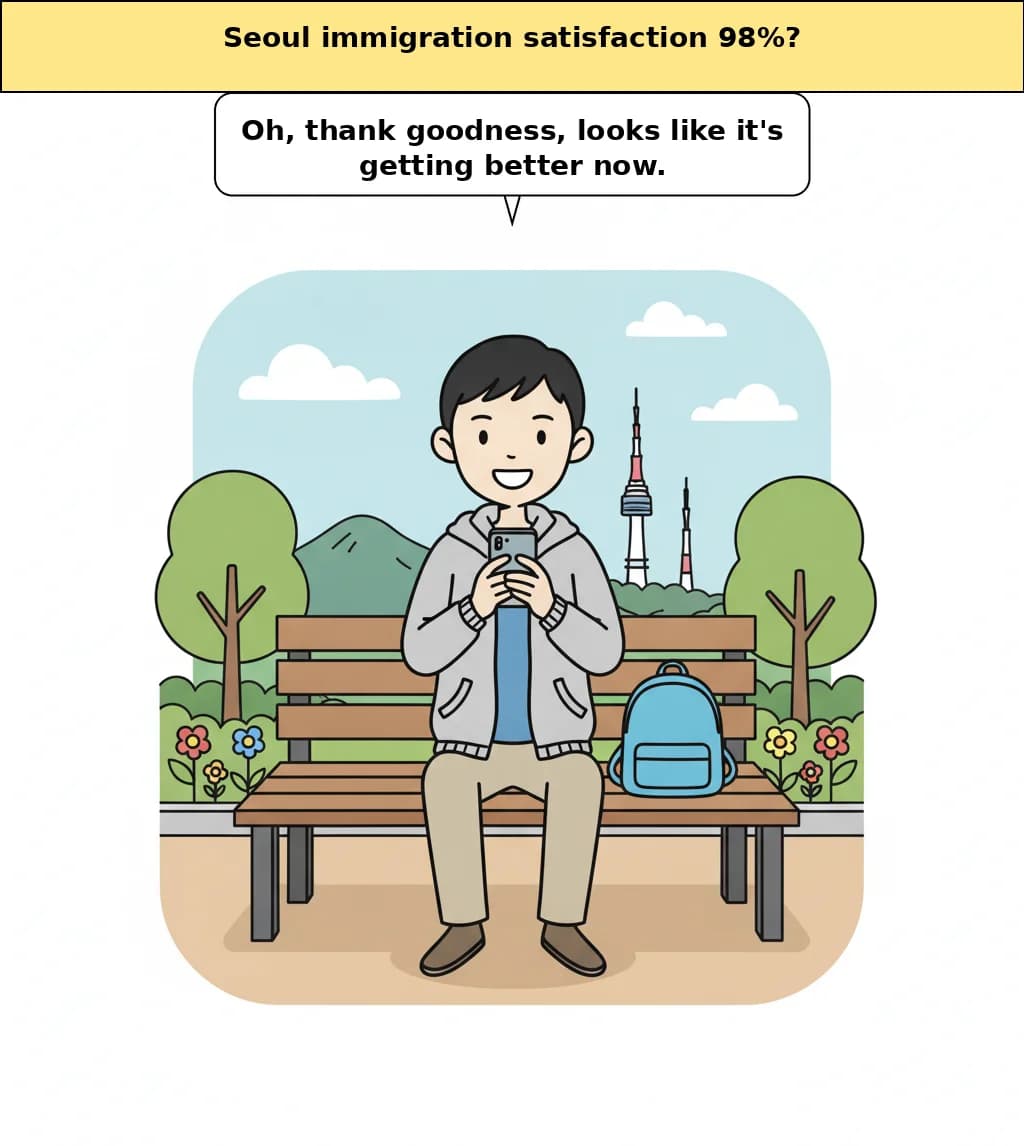
The immigration office has been called a “notorious place” since 1996. Then and now, the required documents change according to the officer’s discretion, so the officer’s word is the law. Why? Because foreigners living in Korea have little information while officers have a lot, and there is no standard procedure to limit administrative discretion. At the end of last year there were about 2.78 million foreigners staying in Korea, the highest ever. 2,159,052 (77.6%) are long‑term residents and the number is expected to exceed 3 million by 2030. Shouldn’t the immigration office, the “face” of Korea, be a bit kinder? But reality seems different. Satisfaction surveys show 98%, yet more people complain than praise. Online complaints keep coming and media like CBS and No Cut News keep pointing out problems. Experts suggest a pre‑screening window like a court registration office, a standard manual, and AI translation apps as solutions.
원문 보기It was already 'notorious' in 1996
In 1996, Dong‑A Ilbo reported the immigration office as a 'notorious place.' Back then, visa approval also depended on the officer’s discretion.
"Why does each officer ask for different documents?" This is a question foreigners ask. Even now the same question comes up. Lee Jaeh-ho, a lawyer at the immigrant center, says the cause is information gaps and unpredictable admin discretion. Even the same rule is read differently by each officer.
Task force grew, but why does it feel the same?
There was a task force, but why isn’t it felt yet?
First issue raised
Dong‑A Ilbo first reported the immigration office as a 'notorious place.'
Complaint‑improvement task force formed
Seoul Immigration Office created a task force for complaint improvement.
Task force reshuffled
The same team was reshuffled again. Repeated reshuffles signal delayed fundamental solutions.
3‑million foreign resident era
If the structure doesn’t change, complaint issues will grow accordingly.
Four alternatives to change the structure
So what should we change? Experts have practical suggestions.
1. Pre‑document review desk
Creating a desk that checks documents early, like a court registry, can cut re‑visits and rejections.
2. Set up a standard manual
A standard manual that everyone follows is needed to stop different interpretations.
3. Introduce AI translation apps
AI translation apps can reduce misunderstandings caused by language barriers.
4. Improve phone communication system
If the 1345 center directly connects to the responsible department, one call can solve the issue. Tip: Call ahead to check required documents before visiting to avoid wasted trips.